




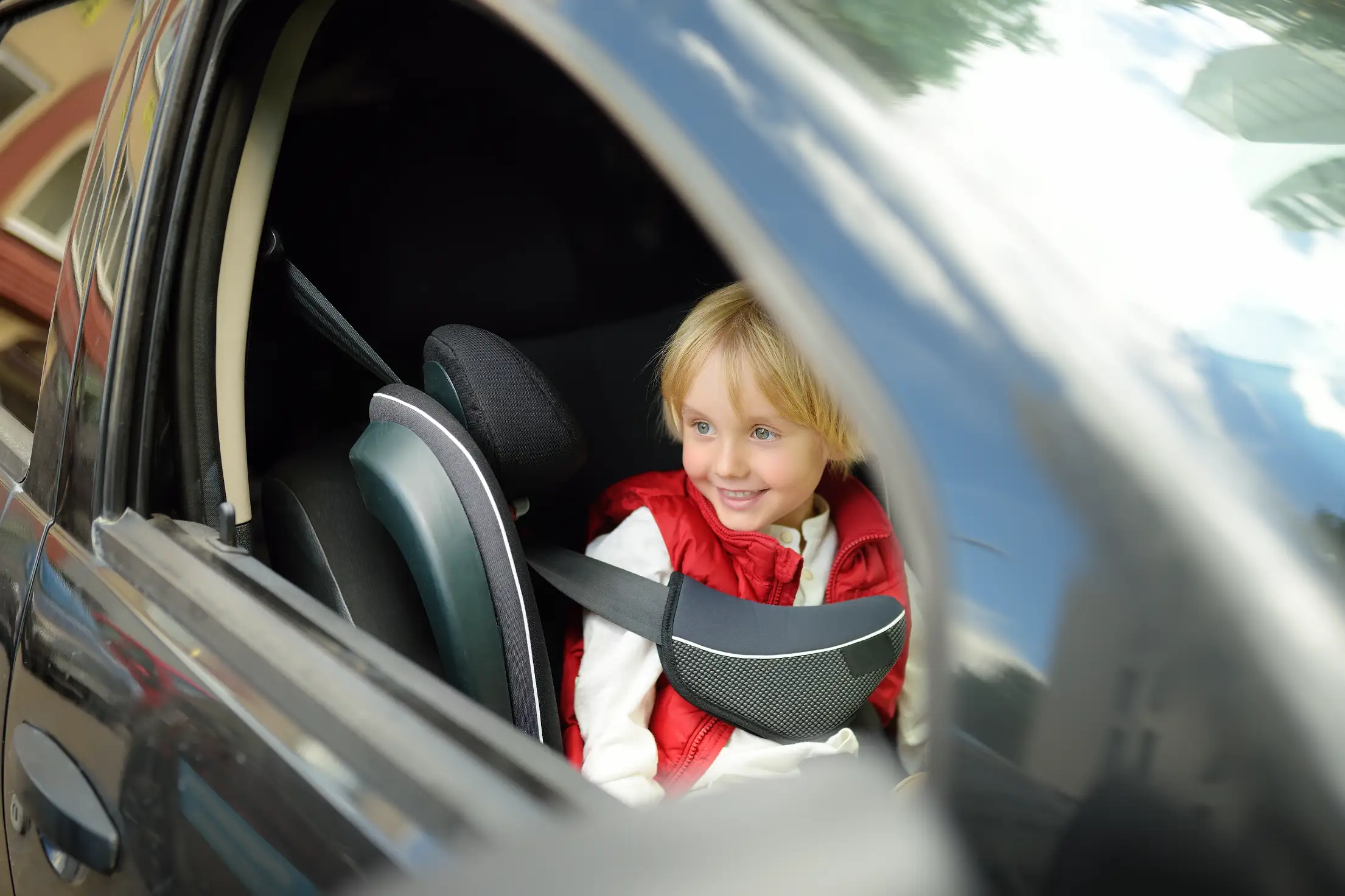
Connecticut does not set a specific age at which children can legally move to the front seat. However, safety organizations widely recommend keeping children in the back seat until they are at least 12 years old, even after they outgrow the legal requirements for car seats and boosters.
What Are the Car Seat Laws in Connecticut?
Federal safety data paints a clear picture of why proper child restraints matter. The National Safety Council (NSC) reports that child safety seats lower the risk of deadly injuries by 71% for babies under one year old and by 54% for toddlers between one and four in passenger vehicles.
Under Connecticut General Statutes § 14-100a, parents and caregivers must follow specific guidelines based on the child’s age, weight, and height. Connecticut law breaks down the requirements as follows:
- Rear-Facing Car Seat (Birth to Age 2): All children must ride in a rear-facing car seat until they reach age two and meet the statutory height and weight requirements.
- Forward-Facing Car Seat (Ages 2 to 5): Once a child outgrows the rear-facing seat, they must transition to a forward-facing car seat with a harness and remain in it until they reach at least age five or exceed the manufacturer’s weight and height limits.
These requirements represent the legal minimum, not the ideal safety standard. Many pediatricians and safety organizations recommend keeping children in each stage of restraint for as long as the seat’s manufacturer guidelines allow.
What Is the Connecticut Booster Seat Law?
Booster seats bridge the gap between a harnessed car seat and a standard seat belt, and Connecticut law requires booster seat use for children aged five to eight who meet specific criteria:
- Weight Requirement: Children who weigh less than 60 pounds must use a booster seat if they are under eight years old, subject to statutory requirements.
- Height Consideration: Even if a child meets the minimum weight threshold, the seat belt must fit correctly across the child’s chest and lap. If it does not, a booster seat is still the safer choice.
- Proper Belt Fit: The lap belt should sit snugly across the upper thighs, and the shoulder belt should cross the center of the chest and shoulder. A booster seat raises the child so the belt achieves this positioning.
Graduating from a booster seat too early is one of the most common mistakes parents make. If the seat belt rides up across your child’s stomach or cuts across their neck, they are not ready to ride without a booster.
When Can a Child Sit in the Front Seat of a Car?
In Connecticut, experts strongly advise that children remain in the back seat until at least age 13 to reduce the risk of injury from airbag deployment. Keeping children properly restrained in the back seat not only enhances their safety in a crash but also helps drivers focus on the road without distraction.
Penalties for Violating Connecticut’s Car Seat Laws
Connecticut enforces its child restraint laws with penalties that reflect how seriously the state treats child passenger safety. Violations carry the following consequences:
- First Offense: An infraction, typically resulting in a fine and possibly a required 2-hour DMV-approved car seat safety course.
- Second Offense: Carries a fine of up to $199 and requires completion of a 2-hour DMV car seat safety course.
- Third or Subsequent Offense: Treated as a Class A misdemeanor, which may involve criminal penalties.
- Safety Course Penalty: Failing to complete the mandatory DMV training can lead to a suspension of your driver’s license.
- Insurance Impact: While a car seat violation is not a moving violation, repeated citations can still affect your driving record and may draw scrutiny from insurance providers.
Beyond the fines, the real cost of ignoring these laws is measured in the safety of your child. A properly installed car seat or booster is one of the simplest and most effective ways to protect your child every time they get in the car.
Schedule a Free Consultation With a Car Accident Lawyer
Front seat decisions can feel like a milestone, but in Connecticut, the safest approach is usually to keep children in the back seat until at least age 13, even if they meet the minimum legal requirements for car seats or boosters. The law sets the baseline, while safety experts recommend going further to reduce the risk of serious injury in a crash.
If your child was injured in a Connecticut car accident caused by another driver, Papcsy Janosov Roche Trial Lawyers can help you understand your legal options and protect your family’s interests. Call 203-642-3888 to schedule a free consultation with a car accident lawyer today.